
As healthcare systems continue to evolve, orthopedic organizations are facing growing pressure to improve access, reduce delays and create a more connected patient experience, all while managing increasing operational complexity behind the scenes.
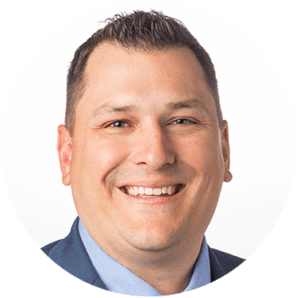
We spoke with our Vice President of Clinical Innovation & Performance, John Bring, about the growing disconnect between healthcare technology and real operational impact, how AI can support care teams without replacing clinicians and why the future of orthopedics depends on better flow, not just better tools.
Q: What areas of orthopedics are you most passionate about? Why?
I am most passionate about building care models that put patients and people at the center while consistently delivering high-quality, safe outcomes.
Too often in orthopedics, patients can experience fragmented care. Scheduling, surgery, recovery and follow-up can feel disconnected, creating unnecessary delays, confusion and stress for patients and families.
The work that matters most to me is designing systems that reduce friction and make the journey easier to navigate from the first interaction through recovery.
When access is reliable and the experience is predictable, patients feel safer and outcomes improve.
Q: What operational pressures are creating the biggest challenges for orthopedic organizations today?
Orthopedic practices are currently balancing several overlapping challenges, including:
- Capacity constraints
- Workforce shortages and staffing pressure
- Administrative complexity
- Fragmented data and workflows
These issues directly limit access to care and place strain on both patients and care teams.
Often, the issue is not clinical capability but operational inconsistency. Most access problems are operational problems, not clinical ones.
At Sequel Ortho, the focus is on creating disciplined operating models supported by technology that helps clinics and operating rooms work together more seamlessly. When systems become more consistent behind the scenes, care teams spend less time navigating processes and more time focused on patients.
Q: What do you consider the biggest gap in the healthcare industry right now? How is Sequel Ortho working to fix it?
One of the biggest gaps in healthcare today is the disconnect between technology adoption and measurable operational impact.
Many organizations invest heavily in tools and platforms without fundamentally changing how decisions are made or how work actually flows. Without governance and clear accountability, technology can create noise instead of progress.
At Sequel Ortho, digital tools are paired with:
- Clear ownership
- Shared performance metrics
- Standardized workflows
- Repeatable operational processes
The goal is not simply adding dashboards or collecting more data — technology only creates value when it changes behavior. With these tools, we want to create measurable improvements in patient access, safety, quality and experience across the entire care continuum.
Q: How is the work Sequel Ortho does different than other orthopedic hospitals?
We take an enterprise approach that puts people first. Technology decisions are directly tied to patient experience, quality outcomes, safety, and ease of access across the entire care journey, not isolated projects.
The result is a practical, repeatable operating model that strengthens partnership with patients while delivering reliable, high quality orthopedic care at scale.
Q: How is AI changing the orthopedic landscape?
AI has the potential to reduce friction across the healthcare experience when it is implemented thoughtfully and integrated into real clinical workflows.
At Sequel Ortho, AI is used as a support layer to:
- Reduce manual administrative work
- Improve coordination between teams
- Surface operational insights
- Help manage patient access and outcomes more effectively
Importantly, AI is not positioned as a replacement for clinicians or clinical judgment. The intent is reducing friction, not introducing uncertainty.
Patients should understand that safety, transparency and trust remain the priority. Human oversight and accountability continue to guide decision-making at every level.
Q: What changes are you seeing in the industry today?
One of the most significant shifts is how strongly patients now associate quality care with operational reliability.
Patients judge care by how it feels as much as how it performs, increasingly expecting:
- Easy scheduling
- Proactive communication
- Coordinated experiences
- Fewer handoffs between teams
- These expectations are heavily influenced by experiences outside of healthcare, where convenience and hyper-personalization have become the norm.
As a result, orthopedic organizations are being pushed to align operations, technology and clinical care around the patient journey rather than individual departments or disconnected systems. That patient experience has shifted from a byproduct of quality care to a differentiator.
Q: What does the future of orthopedics look like?
Orthopedics is moving toward a more outpatient-focused, patient-centered and digitally enabled future.
Patients will continue to expect care that is more convenient, coordinated and transparent without compromising safety or outcomes.
Operational performance will become one of the biggest drivers of patient satisfaction and long-term success. Faster scheduling, clearer expectations and smoother transitions throughout care all stem from stronger operational systems behind the scenes. That better operational performance directly translates to shorter wait times, clearer expectations and smoother journey for patients.
The systems patients do not see are often the ones that matter most — that will continue to be true as we move into the future of orthopedics.
Final Thoughts
Technology alone will not solve healthcare’s biggest challenges. Sustainable improvement happens when operational strategy, clinical excellence and patient experience work together.
At Sequel Ortho, the focus is on building systems that strengthen coordination, simplify complexity and help care teams deliver a more connected experience for every patient.
Our focus is not innovation for show. It is execution that patients can feel.